His name was Christian…
I remember it like it was yesterday: the way we’d ride our bikes down the street and walk home from school together, the way we’d play with our pets and laugh, the way we’d do back-flips and front-flips on my backyard trampoline…
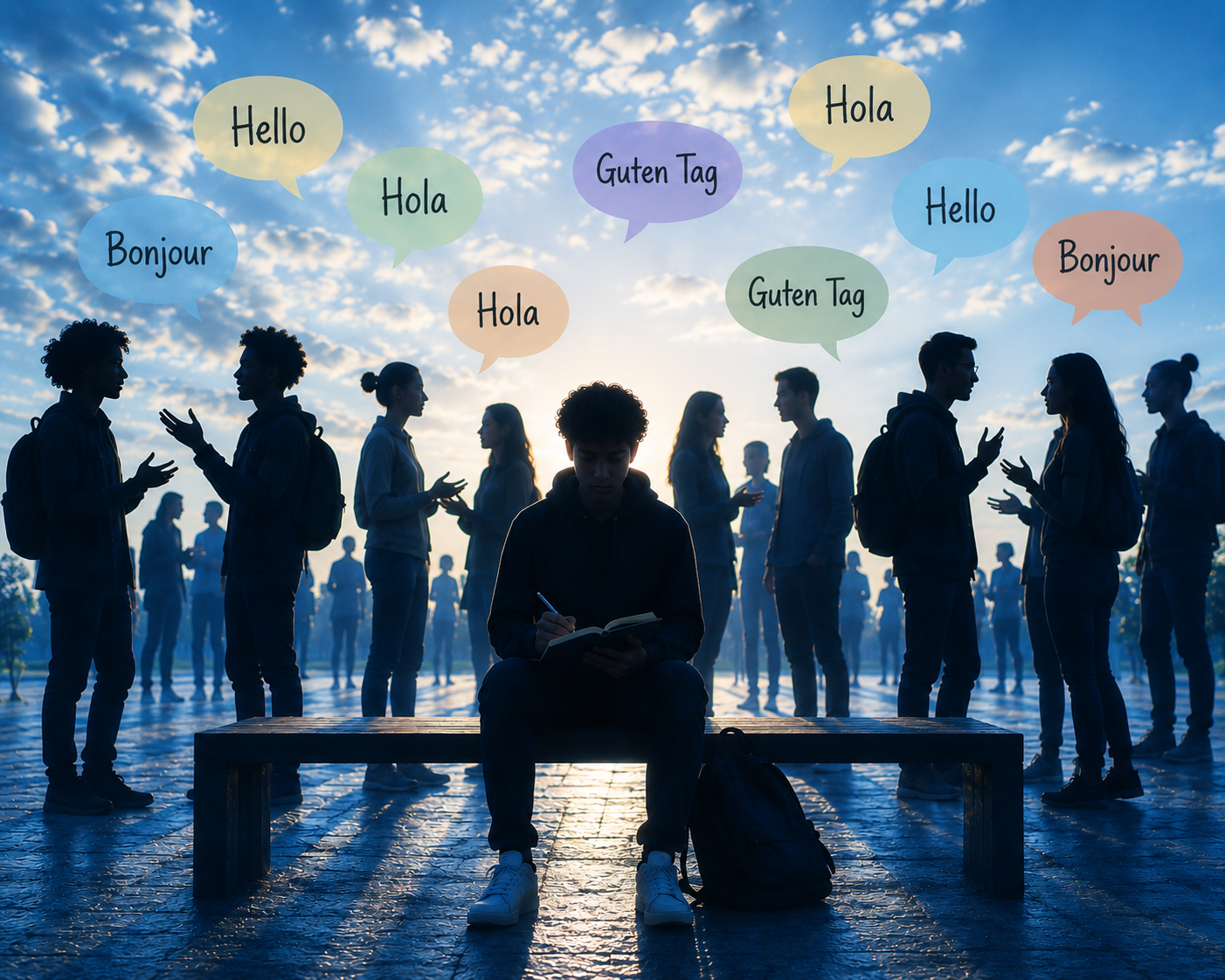
And I remember when he taught me how to say “Hola”.
There were others too: Phoenix, Osvaldo, Cristian (2), Selene and Osiris, Fabian, Israel, and the list goes on. From as young as I can remember, multilingualism has always been a part of me. Before I even stepped foot in a Spanish classroom, I was a Second Language Learner (L2).
But what does it mean to be a Second Language Learner (L2)?
It’s no secret that I’ve long since had my gripes with our abstract and, in my opinion, often deficit-based framing of multilingual learners (MLs).
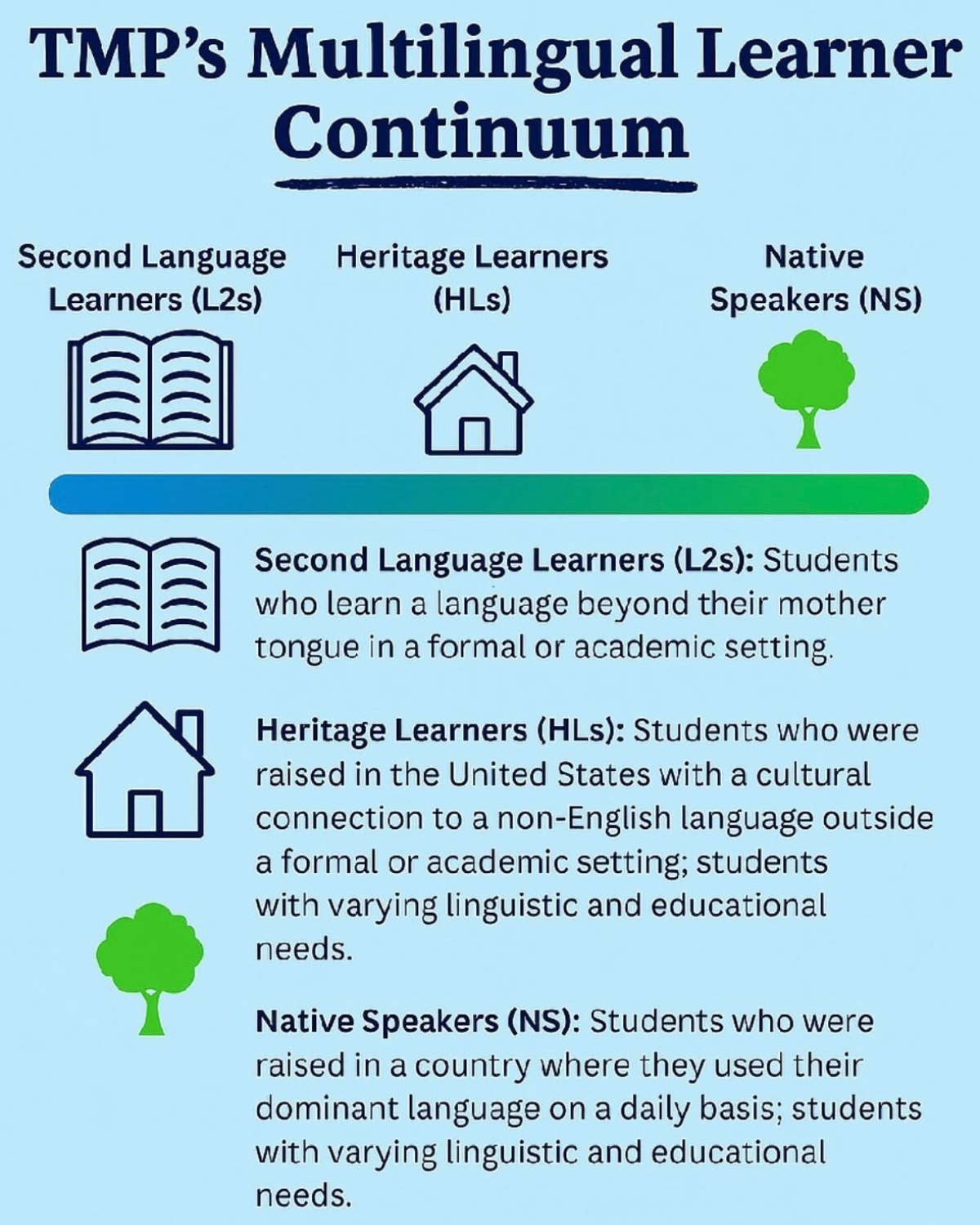
Going so far as to institutionalize that philosophy through TMP’s ML Continuum and its research and advocacy agendas, I’ve all but rejected the idea that MLs are limited to one category, one way of life, and one way of being multilingual.
Even among Heritage Learners (HLs) and Native Speakers (NS), and within those groups themselves, lie a variety of linguistic and life experiences that constitute unique multilingual footprints. So then… what does it mean to be an L2?
To me, it’s an amalgamation of moments—academically, socially, and relationally—that shape one’s relationship to a language and its community. And by that definition… aren’t we all multilingual learners, to some extent?
Growing up Multilingually, While Not Being Multilingual
I was 11 years old when I moved to Aurora, Colorado, from Wisconsin, where I’d spent my early childhood. As a child in a completely new state, I clung to what was familiar to me, and commuted two buses each morning to go to school across town in Denver, where my cousins were.
The middle school I attended has since become one of the most prominent, and at times political, local education agencies (LEAs) in Denver. With a predominantly multilingual and BIPOC student population and an innovative approach to meeting student needs, the school has emerged as a truly respectable institution in the Denver education landscape.
But when I was there, and when my 2 cousins and I constituted half of the school’s Black population—and when we didn’t know an ounce of Spanish—things got rough for us.
In what can only be described as the worst academic year of my life, when bullying ran rampant despite the best of faculty interventions, I finished that year spending six days in a mental hospital for adolescents.
I’ve never spoken on this publicly before. Not because I’m ashamed of my past or drive for language gains beyond altruistic reasons, but because even now, I’m still not sure how to categorize that pain.
After all, what do you do when the language you’ve spent your entire life in proximity to—one you’ve always held near and dear—is weaponized against you?
With no way to fight back, I vowed to myself then that I would never feel multilingually hopeless again.
And Somewhere Along The Way…
I was 14 or 15 years old when I took my first language class. Having wanted to take French, I pleaded with my mother, who, in all her wisdom, mandated that I take Spanish because it would be helpful down the line.
And boy, was she right.
After mere days of instruction, I instantly reconnected with the childhood part of myself that loved language for language’s sake, and went on to receive academic scholarships for postsecondary Spanish language study, started The Beyond Conjugated Podcast, co-founded the Spanish and Linguistics Student Association (SALSA) at CU Denver, and eventually graduated with my Bachelor of Arts in Spanish Language, Literature, and Culture, with an emphasis in Second Language Acquisition (SLA).
Somewhere along the way, between the joys and pains of my multilingual upbringing, I realized that perhaps this is what it means to be a Second Language Learner (L2). Not by academic standards or language gains alone, but the experiences we carry with us for the betterment of multilingualism itself.
Coming Home to The Multilingual Project (TMP)
After years of feeling a mismatch between how important language was to me and the access and opportunities I had to leverage it, and watching countless other multilingual learners across the Continuum experience the same, I wanted to create an intervention unlike anything I’d ever seen—one where language education, accessibility, and transformation would be commonly accessible—and enjoyable—to the benefit of multilingual learners everywhere.
I wanted to create an organization where MLs like me feel like they belong in the conversation. Where it doesn’t matter what your linguistic background is—only that you’re excited about language and the opportunity it presents to unite us. An organization that leverages both the joy and the pain for the betterment of multilingualism.
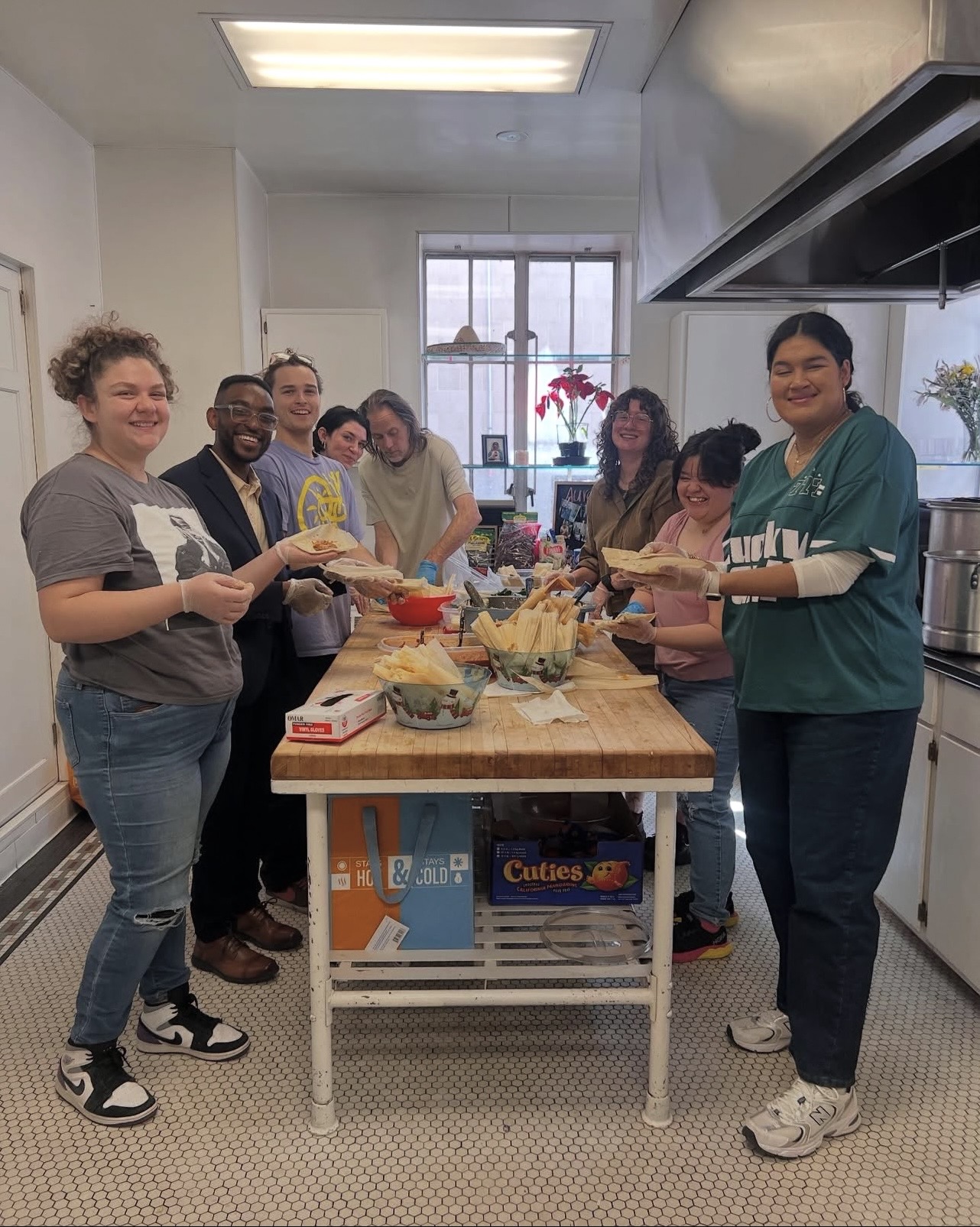
And with your support, that’s exactly what we’ve done. With a growing body of intellectual property, blogs, podcast episodes, and now TMP merchandise, what started as an intervention has now become critical multilingual infrastructure.
The truth is… TMP has never just been about language. It’s about making sense of every multilingual experience that shaped me—the beauty of it, the sense of belonging, the isolation, the hope—and building the kind of multilingual world I once needed for myself. One where all multilingual learners, regardless of where they fall across the Continuum, have a place to call home.
Beyond Words, Into Worlds.