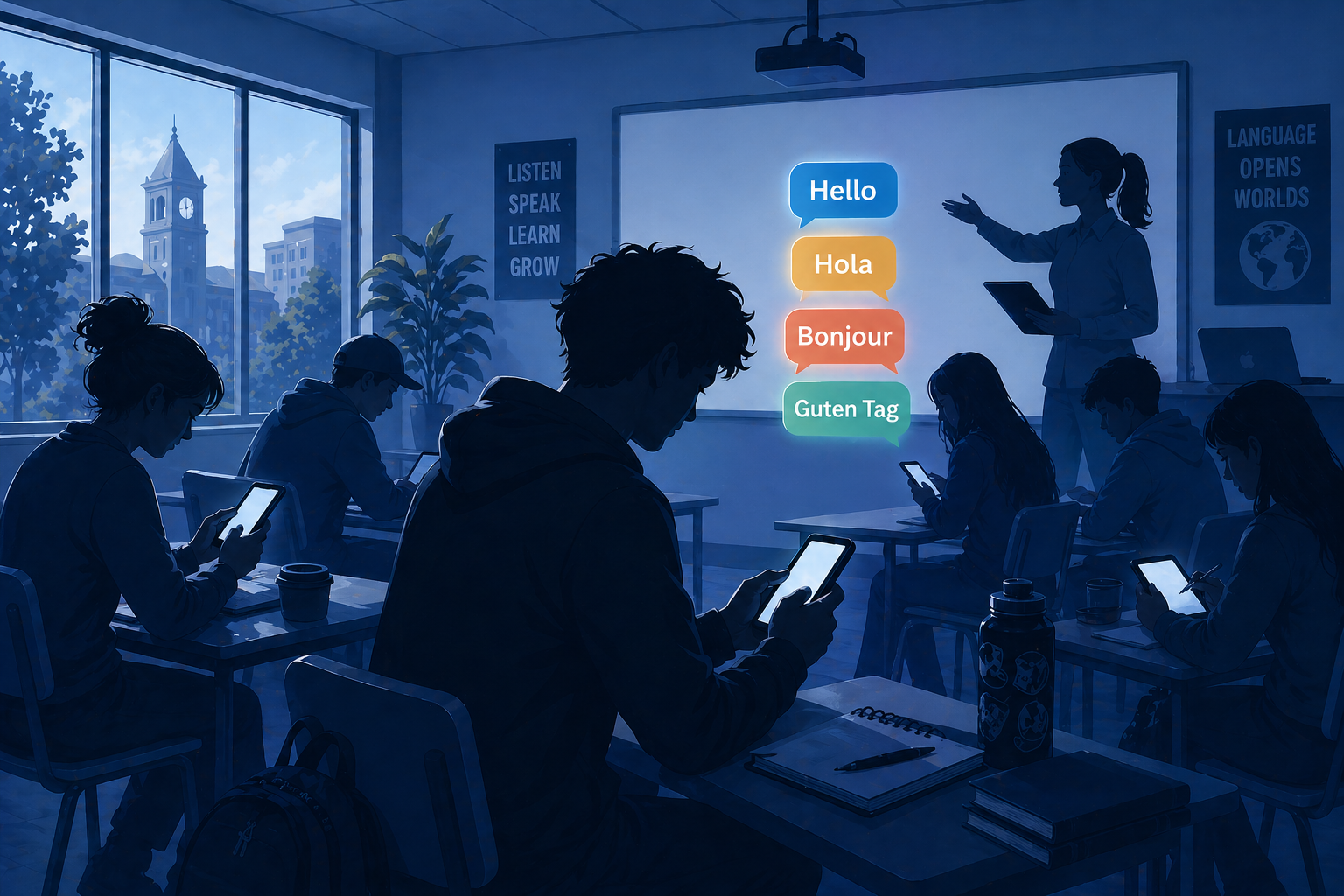
So what’s the deal with language learning apps anyway? Are they impactful? And to that point… impactful to what and for whom, exactly?
For years now, mainstream media and education systems alike have encouraged the use of apps like Duolingo, Babel, and Rosetta Stone, to name a few. And for good reason: in a multilingually-connected world, there’s a profound need for accessible and enjoyable language-learning infrastructure.
But as the language-learning app industry continues to generate billions of dollars annually, postsecondary language education systems are seeing record declines in student enrollment—raising genuine questions about where learners are choosing to access and credential language gains, how they’re engaging with language, and what this shift may signal for the role of traditional language education systems moving forward.
Where Language Accessibility Meets Demand?
Whether planning for an upcoming trip, extending learning beyond classroom walls, or exploring a language otherwise unavailable in traditional settings, language learning apps reach millions of users each year. As multilingual learners navigate education systems, as families prepare to visit cultures outside of their own, and as individuals explore otherwise inaccessible tongues, these apps remain a consistent point of access.
And because of that accessibility, a natural partnership between traditional language education systems and their corresponding technology was formed—one in which language apps have largely been promoted by schools and education leaders alongside formal learning, a partnership that continues to this day.
However, as enrollment in postsecondary foreign language education has seen a near 30% decline over the last decade, while downloads on apps like Duolingo continue to increase, the question of how these diverging trends are reshaping where and how language learning takes place must be raised. Questions like:
- How are factors like cost, flexibility, availability, and user experience shaping learners’ decisions about where to access language learning?
- What do learners gain from the app-based experience that may not be as present in traditional classroom environments?
- What’s the role of language programs in a landscape where language access increasingly begins outside the classroom?
Assuming correlation over causation, at least, one can attribute the growing preference toward app-based learning over classroom learning to the ways accessibility, flexibility, cost, and on-demand engagement are increasingly shaping how and where learners choose to interact with language.
“As demand for English learning rises, so does demand for certification.”
What’s more, according to Duolingo’s 2025 Annual Language Report, this trend isn’t isolated to English speakers expanding linguistic capability, but also reflects millions of non-English speakers worldwide seeking to build and certify English skills. In 2025 alone, the company reports that people from 219 countries and 148 first languages took the Duolingo English Test, attributing these numbers to a growing desire for English-language certification.
Across the continuum of multilingual learners—from Second Language Learners (L2s) accessing language apps for extended learning of non-English languages outside the classroom to Heritage Learners and Native Speakers of non-English languages using them to practice English—the growing preference for these apps is noteworthy.
And as traditional credentialing systems struggle to maintain pace with the desire for non-traditional, innovative, and cost-effective approaches to language certification, what becomes of the role of traditional pathways in recognizing and validating language proficiency?
An Interconnected Ecosystem
At The Multilingual Project, we don’t see this as an either/or, but as an interconnected ecosystem with the opportunity to align better where language is accessed, how it is developed, and how it is ultimately recognized across systems.
The innovation, accessibility, and enjoyment of language learning apps, when strategically combined with the institutional capacity of high-quality language pathways, have the opportunity to unlock access points and language gains for millions of multilingual learners around the world. Not by accepting a status quo where traditional systems are left out to dry, but by integrating innovative approaches into existing systems in ways that strengthen how language is accessed, developed, and recognized. Beyond Words, Into Worlds.
The Multilingual Project is a nonpartisan, multimedia research, advocacy, and translation company on a mission to create a more robust and responsive multilingual education system.