Author: The Multilingual Project
-
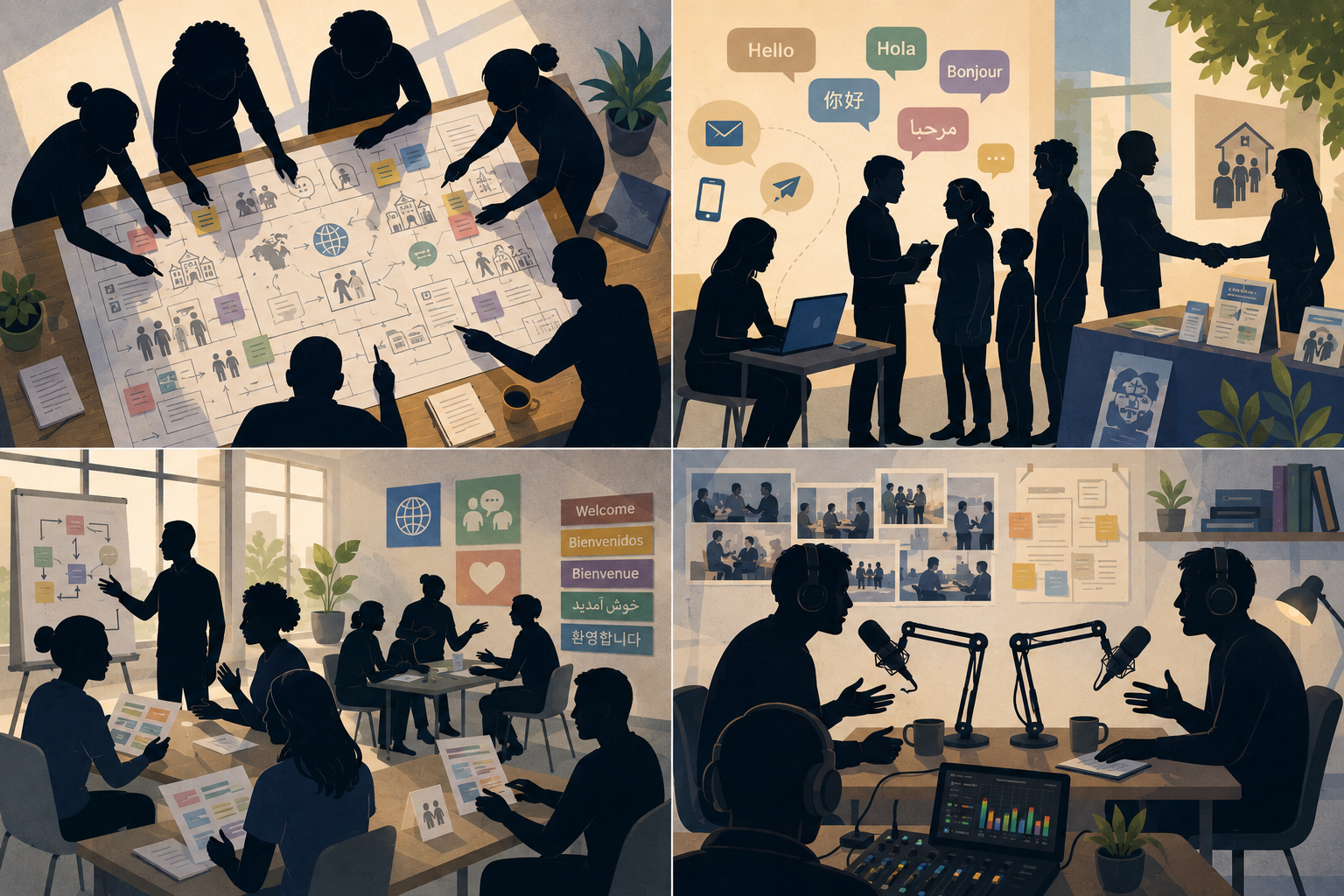
Fundamentos de la programación multilingüe
Los programas organizativos tienen el poder de transformar vidas de maneras muy profundas. Como espacios de acceso, oportunidades, pertenencia social, desarrollo profesional y la movilidad económica ascendente, incorporar la Accesibilidad Lingüística y la Transformación Lingüística en la programación, desde el diseño hasta la implementación, marca una diferencia significativa para las comunidades multilingües. Cuando un programa:…
-
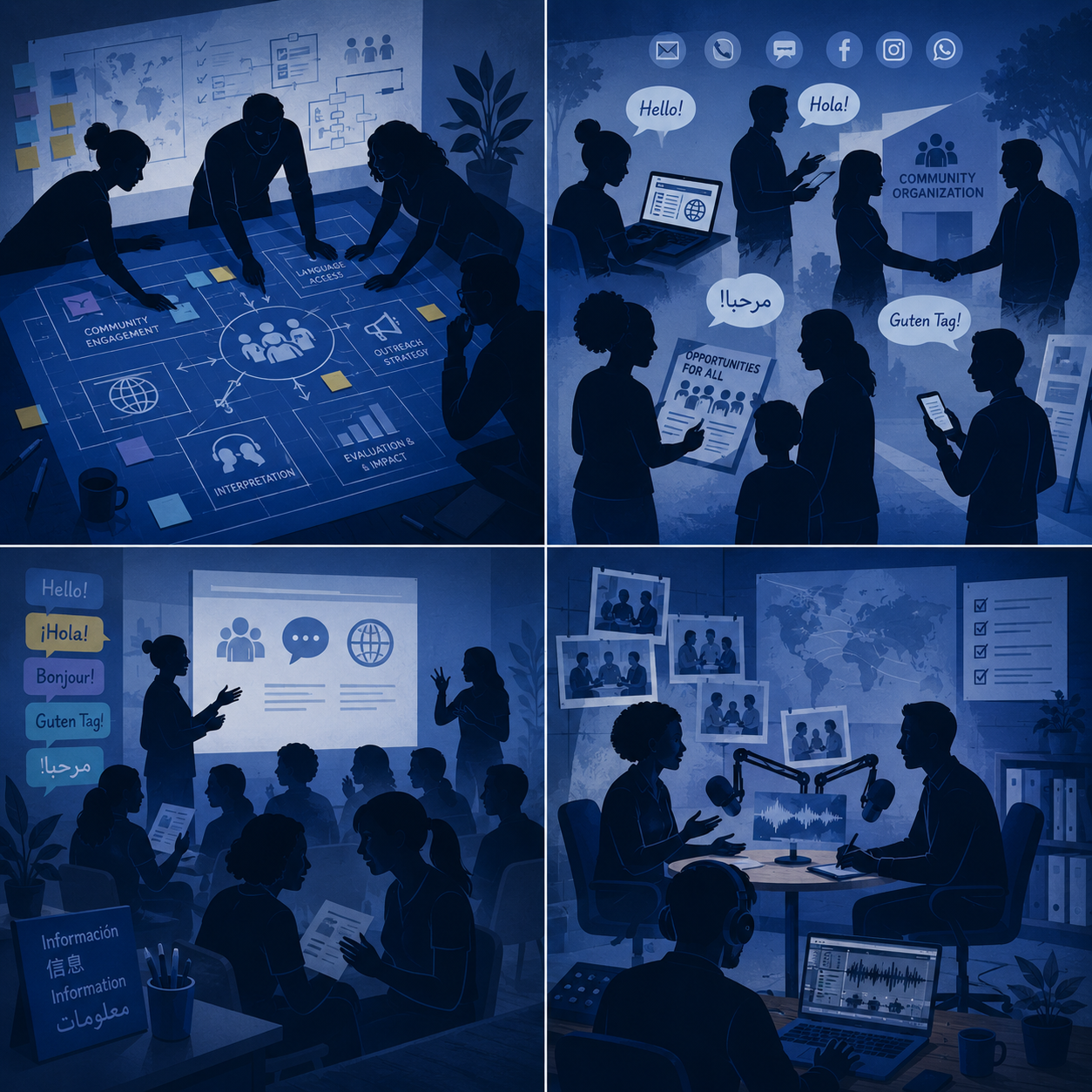
Foundations of Multilingual Programming
Programs have the power to shape lives in profound ways. As points of access, opportunity, social belonging, professional development, and upward economic mobility, incorporating Language Accessibility and Language Transformation into programming—from design to implementation—makes all the difference for multilingual communities. When a program is: It becomes a mechanism through which multilingual communities can access opportunity,…
-
Logos & Language Accessibility
What shapes the way organizations are understood by the people around them? The answer is rarely found in any single interaction, communication, decision, service, or experience. Rather, it emerges through accumulation. Every interaction, communication, decision, service, and experience contributes to broader perceptions regarding who an organization is, what it values, and how it operates. Taken…
-
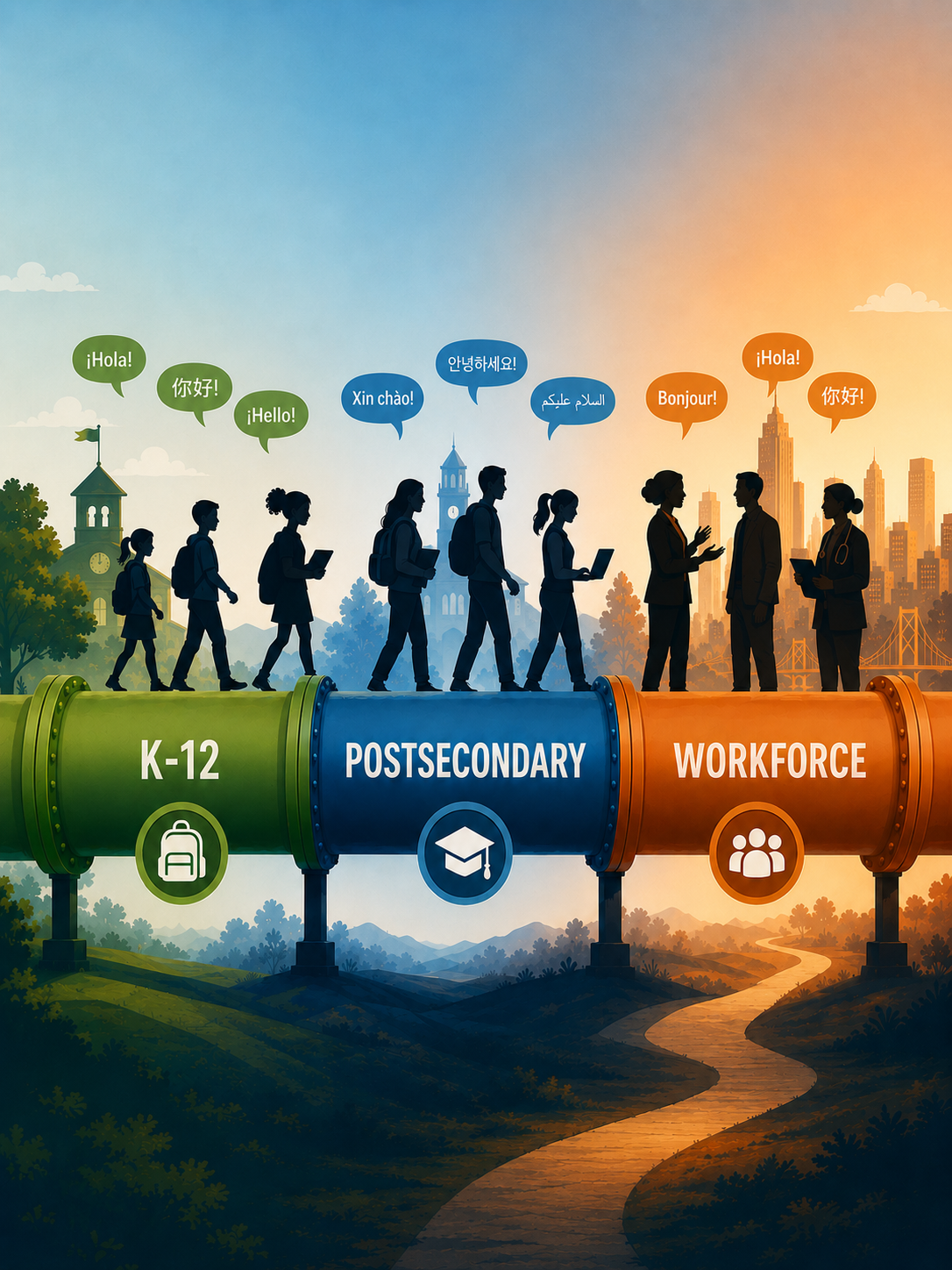
From Classroom to Career: Building Multilingual Talent Pipelines
For years, conversations surrounding multilingualism and workforce development have largely operated on parallel tracks. One focused on language acquisition and accessibility, academic achievement, and multilingual learner outcomes. The other focused on labor shortages, credential attainment, industry demand, workforce readiness, and economic mobility. Increasingly, those conversations are beginning to intersect. Colorado’s recent workforce agenda reflects a…
-

La disolución de la Oficina de Adquisición del Idioma Inglés de EE. UU. (OELA)
Como subdivisión del Departamento de Educación de los Estados Unidos (USDE), la Oficina de Adquisición del Idioma Inglés (OELA) tiene la responsabilidad de apoyar a los English Learners (ELs) y a estudiantes inmigrantes a través de infraestructura federal relacionada con: En febrero de 2026, el USDE notificó formalmente al Congreso su intención de disolver la…
-

Understanding the Dissolution of the U.S. Office of English Language Acquisition (OELA)
As a subdivision of the U.S. Department of Education (USDE), the Office of English Language Acquisition (OELA) is tasked with supporting English Learners (ELs) and immigrant students through federal education infrastructure tied to: In February 2026, the USDE formally notified Congress of its intent to dissolve OELA as a standalone office and redistribute its many…
-

When Multilingual Spaces Emerge
It’s often said that multilingualism—in its purest form—is an experience with the self, with others, and with the self in relation to others. That through language learning—and language living—two seemingly distinct stories and perspectives, two different lives, are not so different after all. And that perhaps, in where they do differ, there exists an opportunity…
-
So… What’s the Deal With Language Learning Apps?
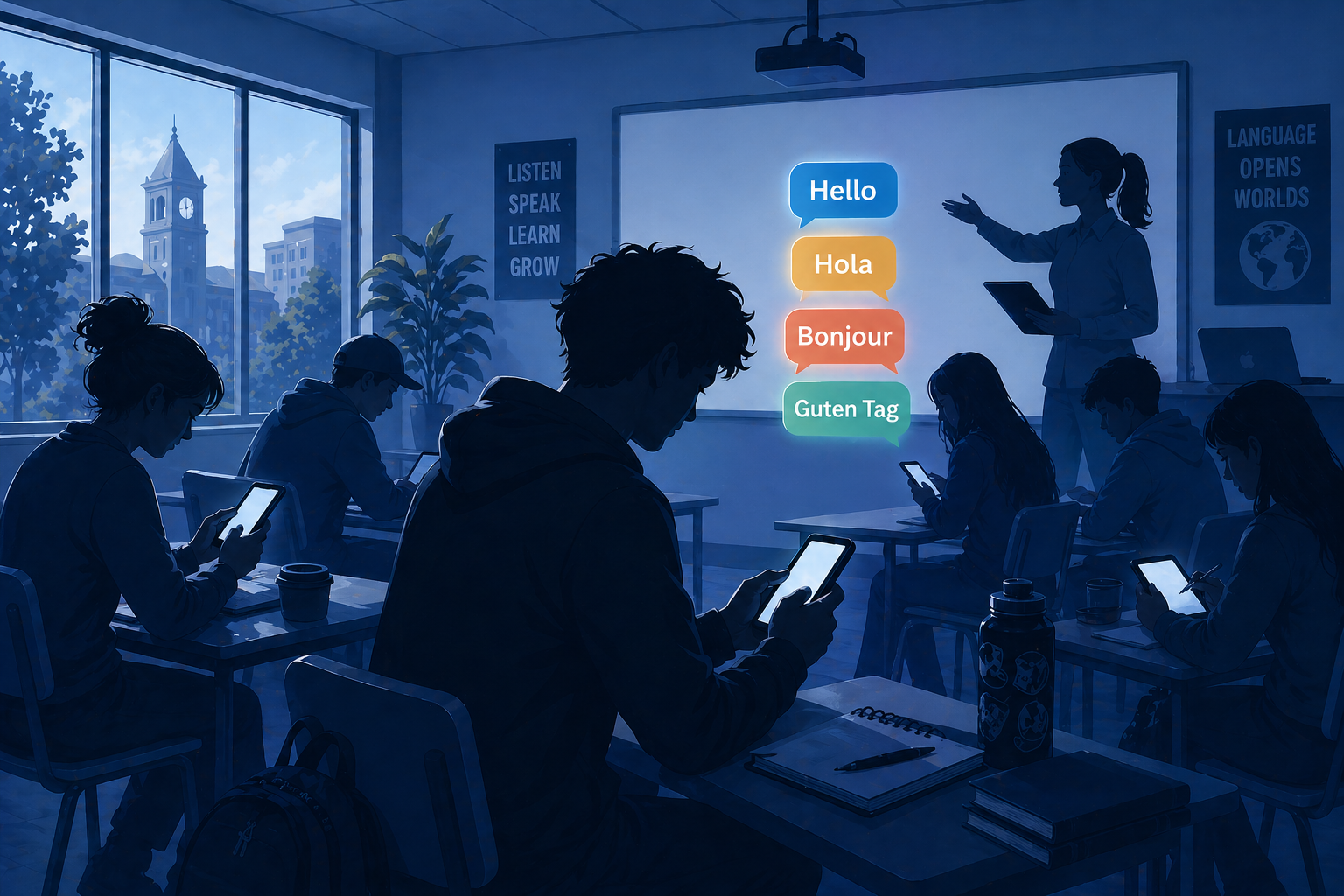
So what’s the deal with language learning apps anyway? Are they impactful? And to that point… impactful to what and for whom, exactly? For years now, mainstream media and education systems alike have encouraged the use of apps like Duolingo, Babel, and Rosetta Stone, to name a few. And for good reason: in a multilingually-connected…
-
One Year Later: A Multilingual Nation, A Monolingual Policy
Language & A Collective Linguistic Identity What makes a language the official tongue of a nation? Is it determined by a country’s culture and values? The number of speakers who live there? Is it rooted in the political and philosophical ideology of the times? Or perhaps… It’s some combination of all of the above. On…
-

From Correction to Continuity: The Impact of Heritage Language Education (HLE) on Multilingual Learners
Language, Belonging, & The Multilingual Learner Experience There’s a certain sense of belonging that returns to Heritage Learners (HLs) in a language classroom centered on their development. For years now, language education has largely aligned with standards that prefer the prestige variety. And for good reason: from Second Language Learners (L2s) to HLs to Native…
-

Monolingual Institutions, Multilingual Systems
The Multilingual Project is a nonpartisan, multimedia research, advocacy, and translation company on a mission to create a more robust and responsive multilingual education system. TMP leverages cutting-edge research, strategic advocacy, and seamless translation services to empower organizations, businesses, schools/districts, and communities with the multilingual expertise they need to thrive. Supply, Demand, & The Systems…