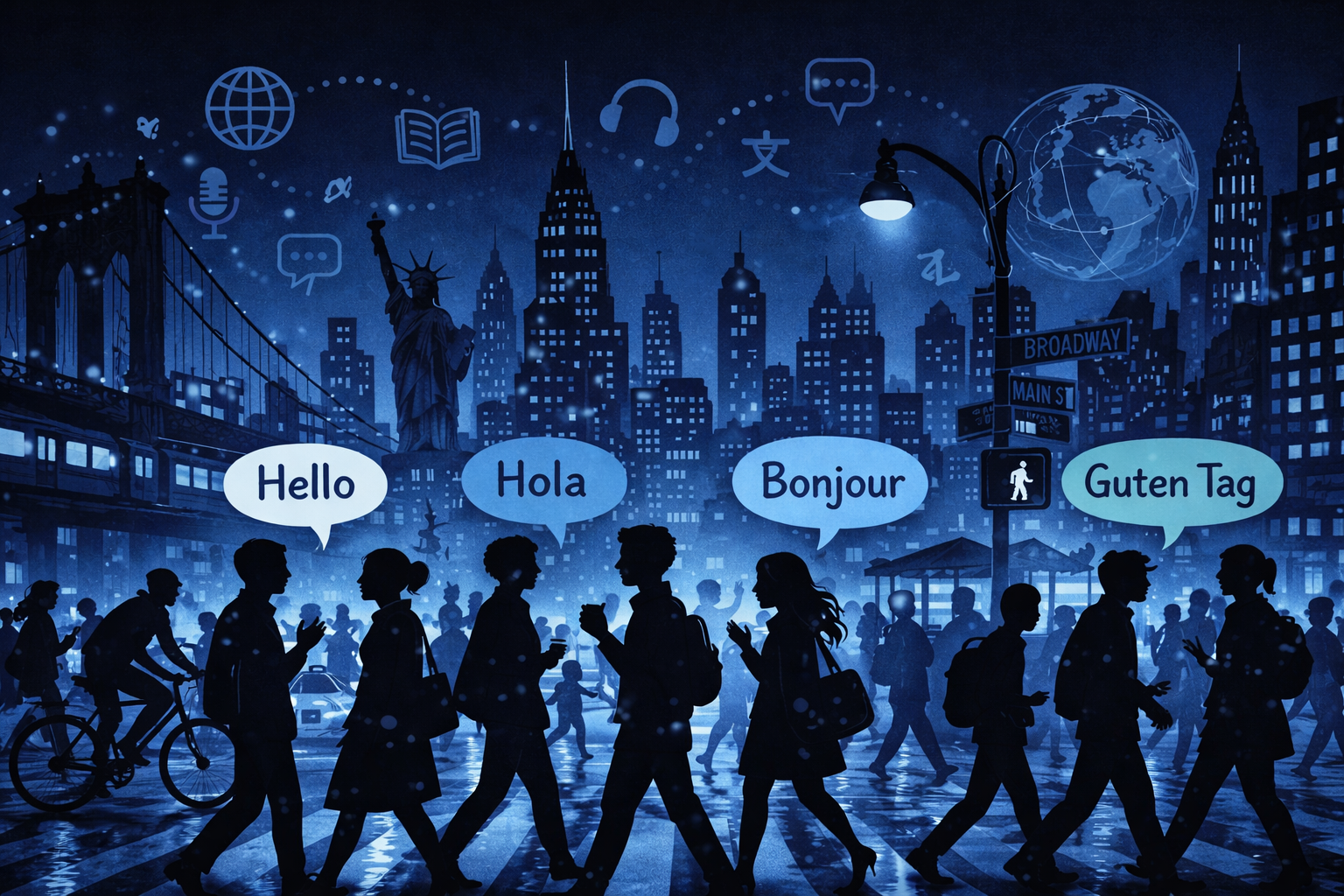
Language & A Collective Linguistic Identity
What makes a language the official tongue of a nation?
Is it determined by a country’s culture and values? The number of speakers who live there? Is it rooted in the political and philosophical ideology of the times?
Or perhaps… It’s some combination of all of the above.
On March 1st, 2025, President Trump signed an executive order designating English as the official language of the United States, reversing centuries of progress in U.S. norms and policies around multilingualism and language accessibility.
And while plenty of countries are no strangers to a designated lingua franca, ironically, the United States to date remains the second-largest Spanish-speaking country in the world, only behind Mexico in speakers per capita. What’s more, according to recent U.S. Census data, the number of people who speak a language other than English at home grew from 1 in 10 in 1980 to 1 in 5 by 2019.
1 in 5.
One Year Later…
These are neighbors—everyday parents who send their kids to school, people who access public services like hospitals and regulatory offices—and already did so while navigating the many language barriers of American society. One year later, with a rollback in equitable and accessible language policy, these challenges have only deepened.
Across the country, the effects have taken shape in ways both visible and subtle. For some, it shows up in loosened federal regulations on language accessibility—fewer translated documents, longer wait times, and moments of uncertainty where clarity was once strong. And for others, it shows up as feelings of helplessness or nihilism.
The impact of an official language—in the United States—isn’t just political. It sends a message about the linguistic and cultural direction of the nation. A country that once valued a non-conforming linguistic identity suddenly becomes one where identity is expected to conform.
Power to the People
Despite everything, though, one thing is for sure: in what can only be described as a challenging time for multilingualism—where funding for school districts supporting as many as 50 languages is cut and reinstated on a whim, where institutions of higher education across the country are seeing record declines in foreign language enrollment in response to its growing devaluation, and where English is designated as the official language in a nation where 1 in 5 people speak a language other than that at home—we’ve seen numerous champions rise to meet the moment.
A moment that calls for strength. For audacity. For multilingual learners and communities across the entire continuum—and their allies—to come together to continue fighting for a better future. For a more multilingual future. One where parents and families can receive information in the language they’re most comfortable with. One where systems and institutions are responsive to multilingual needs.
Keep on Fighting
And at The Multilingual Project, it’s our mission to give those champions a voice. To give aspiring champions a toolkit and a path forward. To create a more robust and responsive multilingual education system—one word and one voice at a time.
The Multilingual Project is a nonpartisan, multimedia research, advocacy, and translation company that leverages cutting-edge research, strategic advocacy, and seamless translation services to empower organizations, businesses, schools/districts, and communities with the multilingual expertise they need to thrive.